Canada has made a significant shift in its work permit strategy for 2026 — and while the headline isn’t quite “no more LMIA,” it’s close enough to matter for skilled workers planning a move. Here’s an accurate breakdown of what’s actually changed.
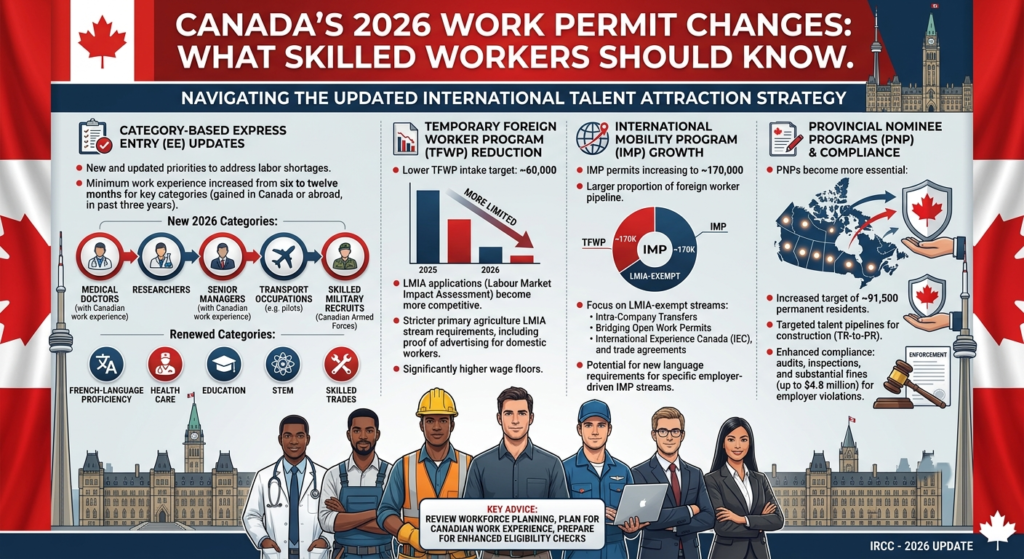
A Labour Market Impact Assessment (LMIA) is the document Canadian employers traditionally needed before hiring a foreign worker, proving no Canadian was available for the role. In 2026, Canada has clearly shifted its strategy away from this route:
In practice, this means Canada is now issuing close to three LMIA-exempt permits for every LMIA-based one — a major reversal from previous years.
The Innovation Stream has been extended. Skilled workers with a genuine job offer in a high-skill occupation (TEER 0, 1, 2, or 3) from an employer enrolled in Canada’s Global Hypergrowth Project can apply for an LMIA-exempt work permit under this stream, which has now been extended through March 2028.
Spousal work permits remain available for skilled-worker households — but with tighter rules. Spouses of workers in lower-skilled occupations, and most undergraduate student spouses, no longer qualify for an LMIA-exempt open work permit.
Francophone and bilingual workers get a boost. Skilled, French-speaking workers can access LMIA-exempt permits for roles outside Quebec, supporting Canada’s push to grow Francophone communities nationwide.
Scrutiny is going up, not down. Even though LMIA-exempt categories are expanding, immigration officers are applying more thorough checks on job legitimacy, wage levels, and whether an applicant genuinely fits their claimed exemption category.
LMIA-exempt does not mean the job or the process is unregulated. Employers still cannot pay below prevailing wage, charge illegal recruitment fees, or misrepresent job duties — and Employment and Social Development Canada (ESDC) continues to inspect for compliance.
Navigating which LMIA-exempt category fits your profile — and which employers are positioned to sponsor it — takes up-to-date knowledge of a fast-moving policy landscape. As a licensed Overseas Employment Promoter, Al-Mojal International helps candidates identify genuine, compliant opportunities in Canada’s evolving skilled-worker pipeline.